



Home | Find a Doctor | Careers | Calendar | Contact Us | Send a Gift
 
For more information, please call us at: 302-629-6611
 
 
  • About Us
  • Community Outreach
  • Events
  • Find A Physician
  • News
  • Online Bill Payment
  • Patients & Visitors
  • Physician Network
  • Programs & Services
  • Ways To Give

Find a Doctor

Our professionals have access to the latest technologies to provide patients innovative care close to home.

Advanced Search

Physician Referrals:

1-877-NHS4DOCS

Calendar


Maps & Directions

Located along the Nanticoke River in Seaford, Delaware

Get a map and directions >

View NewsLetters
Sign up
 
for our Email Newsletter
For Email Marketing you can trust

Interventional Cardiology


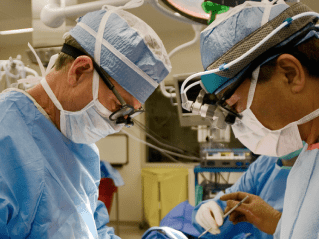
Nanticoke Health Services is pleased to announce the opening of its second cardiac catheterization lab.  Nanticoke cared for its first patient in the new catheterization lab on June 27, 2012.  In addition, Nanticoke Cardiology will soon be adding a second interventional cardiologist to its practice.  With these additions, Nanticoke will soon be able to provide interventional cardiology services 24 hours a day, 7 days a week.  We are grateful for the leadership by Nanticoke Cardiology, the cardiology team at Nanticoke and for the support of our community.  


What does an intervention cardiologist do?

An Interventional Cardiologist is a cardiac physician that deals specifically with catheter-based treatment of structural diseases of the heart.

Several procedures can be performed on the heart by an Interventional Cardiologist through catheterization, including stenting, angioplasty, cardiac
ablation, valvuloplasty, congenital heart defect modifications, and coronary thrombectomy.
The main advantages of having heart related procedures preformed by an interventional cardiologist, involve the avoidance of scars, pain, and lengthy recovery associated with surgery. Interventional cardiology procedures are generally less invasive than conventional surgery. Since catheterization involves only one small incision for insertion, most interventional cardiology patients do not require general anesthesia. Commonly, procedures are complete within an hour.
One very crucial, life-saving procedure completed by an Interventional Cardiologist, is called percutaneous cardiac intervention, or PCI. During PCI, blocked blood vessels in the heart are accessed and cleared, restoring blood flow to stop a heart attack in its tracks. The ability to clear heart blockages can make a lifesaving difference.
Recent studies support the link between modifying risk factors and reducing cardiovascular disease. According to the American Heart Association, the following are modifiable risk factors for cardiovascular disease:
  • Smoking
  • Overweight or Obesity
  • Physical Inactivity
  • High Blood Pressure
  • High Cholesterol
  • Diabetes

Copyright © Nanticoke Health Services. 801 Middleford Road, Seaford, Delaware 19973
Sitemap | Contact Us | Disclaimer | Privacy Policy | For Our Physicians | Maps & Directions